Can Your Gut Bacteria Decide What You Crave?
Have you ever experienced an intense, sudden craving for sweets or processed carbs, wondering if it was just a lack of willpower? Modern nutritional science reveals a fascinating plot twist: your dietary choices are not solely driven by your own brain, but also by the trillions of microorganisms living in your gut.
The Gut-Brain Connection: Who is Really in Charge?
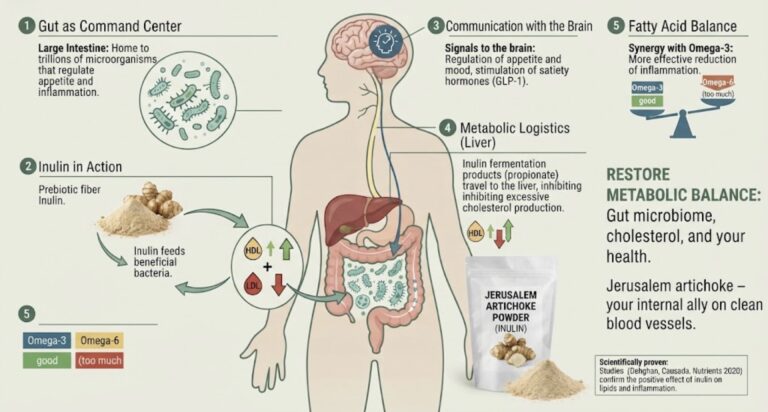
Your gut microbiota can produce neurotransmitters and signaling molecules (such as dopamine and serotonin) that communicate directly with the brain via the vagus nerve, actively influencing appetite and mood. When specific bacterial strains dominate your intestinal ecosystem, they can drive targeted cravings for the exact nutrients they need to survive—often translating into a desire for sugar or specific fatty acids.
Research shows that gut bacteria can directly alter host taste receptor sensitivities. However, this biological feedback loop also works in reverse: we can actively reshape our microbial populations through strategic nutrition.
Enter Inulin: The Metabolic Game-Changer
Where does functional food innovation intersect with this microbial control center? The answer lies in inulin- a natural prebiotic dietary fiber abundantly found in Jerusalem artichoke (Helianthus tuberosus).
- Microbial Nourishment: Inulin acts as a selective prebiotic substrate, feeding beneficial bacteria (such as Bifidobacterium) in the gut.
- Appetite and Glycemic Regulation: Clinical studies demonstrate that introducing prebiotic fiber alters the gut microbiome, naturally suppressing excessive cravings for high-sugar and high-fat foods while stimulating the release of satiety hormones like GLP-1.
- Short-Chain Fatty Acids (SCFAs): As gut bacteria ferment inulin, they produce SCFAs (such as propionate), which travel to the liver, modulate endogenous cholesterol synthesis, and improve peripheral insulin sensitivity.
What Does the Science Say? - Microbiome and Cravings: Landmark studies by Cani et al. (2007, 2009) highlight how prebiotic supplementation profoundly shifts gut peptide secretion and metabolic signaling, helping to regulate overall energy intake and blood glucose dynamics.
- Systemic and Metabolic Support: Systematic reviews confirm that consistent intake of inulin-type fructans effectively supports lipid profiles and helps attenuate inflammatory biomarkers.
Your Daily Strategic Action Plan
Shaping your dietary habits is not about strict restriction; it is about nourishing the right microbial allies. Incorporating 1–2 teaspoons of premium Jerusalem artichoke powder daily provides a rich source of native inulin and pectin. By feeding your beneficial gut bacteria consistently every day, you establish long-term metabolic resilience, stabilize your energy levels, and take back control of your cravings.
#GutHealth #Microbiome #Prebiotics #JerusalemArtichoke #FoodScience #NutritionScience #B2BIngredients #Sunchoke