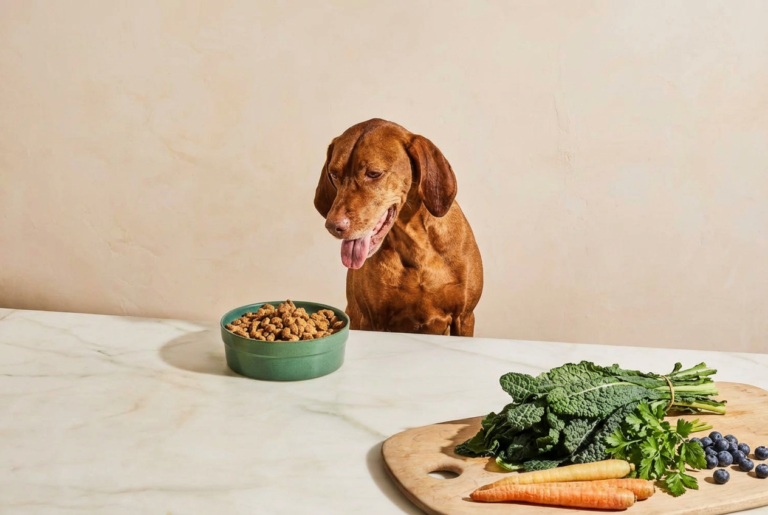
Inulin for Dogs
In canine nutrition, natural prebiotic sources such as inulin and other fructans from Jerusalem artichoke have been shown to improve digestion, gut function, and overall health.
These ingredients support better nutrient absorption, healthier stool quality, and more balanced gut metabolite profiles in dog food and other types of animal food.
Key benefits include increased short-chain fatty acid (SCFA) production, reduced formation of harmful protein fermentation byproducts, and measurable improvements in colon health.
While changes in the microbiome may appear modest, studies show they are functionally significant — especially in dogs consuming high-protein or raw healthy food diets.
Overall, inulin and fructooligosaccharides (FOS) are highly effective prebiotics in animal nutrition. Their impact depends on factors such as dosage, dietary composition, and the natural source — with Topinambur or Jerusalem artichoke standing out as a powerful, functional ingredient for modern dog food and animal feed formulations.
Effects of Inulin and Fructans on Digestive Health in Dogs
Digestibility and Stool Quality
• Flickinger et al. (2003) found that fructan supplementation (inulin and oligofructose) improved nutrient digestibility and reduced protein catabolites such as ammonia and phenols, indicating a healthier gut environment.
• Propst et al. (2003) showed a dose-dependent response: moderate fructan levels improved stool quality and nutrient absorption, while very high doses reduced digestibility.
• Barry et al. (2009) demonstrated that even low-level fructan supplementation enhanced nutrient digestion and modified stool metabolites, though it did not significantly alter microbiota composition.
Microbial Modulation and Fermentation
• Middelbos et al. (2007) compared different oligosaccharides and fiber sources, finding that fructans increased fermentation and SCFA production, especially butyrate, which supports colon health.
• Pinna et al. (2018) found that fructooligosaccharides (FOS), combined with controlled protein intake, shifted bacterial populations and reduced harmful fermentation byproducts.
• Vierbaum et al. (2019) confirmed that both inulin and Yucca extract enhanced fermentation potential in vitro, particularly in high-protein diets where undesirable protein fermentation can occur.
Fecal Microbiota and Prebiotic Effects
• Beloshapka et al. (2013) reported that inulin or yeast extract added to raw meat-based diets did not drastically alter microbiota composition, but subtle shifts in bacterial populations suggested some prebiotic activity.
• Hussein et al. (1999) and Flickinger & Van Loo (2003) summarized earlier work, emphasizing that inulin and oligofructose consistently act as prebiotics, selectively stimulating beneficial gut bacteria such as Bifidobacterium and Lactobacillus, especially when paired with appropriate dietary contexts.
Conclusions
• Inulin and other fructans positively affect nutrient digestibility, stool quality, and gut metabolite profiles in dogs.
• Benefits include enhanced SCFA production, reduced harmful protein fermentation byproducts, and improved colon health markers.
• Microbial changes are modest but functionally relevant, particularly under high-protein or raw diet conditions.
• Inulin and FOS are valuable prebiotics in canine nutrition, with dose, diet composition, and source influencing their effectiveness.
References
• Flickinger EA, Schreijen EM, Patil AR, Hussein HS, Grieshop CM, Merchen NR, Fahey GC Jr. Nutrient digestibilities, microbial populations, and protein catabolites as affected by fructan supplementation of dog diets. J Anim Sci. 2003 Aug. PubMed 12926783
• Middelbos IS, Fastinger ND, Fahey GC Jr. Evaluation of fermentable oligosaccharides in diets fed to dogs in comparison to fiber standards. J Anim Sci. 2007 Nov. PubMed 17686893
• Flickinger EA, Van Loo J, Fahey GC Jr. Nutritional responses to the presence of inulin and oligofructose in the diets of domesticated animals: a review. Crit Rev Food Sci Nutr. 2003. PubMed 12587985
• Hussein HS, Flickinger EA, Fahey GC Jr. Petfood applications of inulin and oligofructose. J Nutr. 1999 Jul. PubMed 10395620
• Propst EL, Flickinger EA, Bauer LL, Merchen NR, Fahey GC Jr. A dose-response experiment evaluating the effects of oligofructose and inulin on nutrient digestibility, stool quality, and fecal protein catabolites in healthy adult dogs. J Anim Sci. 2003 Dec. PubMed 14677862
• Vierbaum L, Eisenhauer L, Vahjen W, Zentek J. In vitro evaluation of the effects of Yucca schidigera and inulin on the fermentation potential of the faecal microbiota of dogs fed diets with low or high protein concentrations. Arch Anim Nutr. 2019 Oct. PubMed 31137970
• Pinna C, Vecchiato CG, Bolduan C, Grandi M, Stefanelli C, Windisch W, Zaghini G, Biagi G. Influence of dietary protein and fructooligosaccharides on fecal fermentative end-products, fecal bacterial populations and apparent total tract digestibility in dogs. BMC Vet Res. 2018 Mar 20. PubMed 29558912
• Barry KA, Hernot DC, Middelbos IS, Francis C, Dunsford B, Swanson KS, Fahey GC Jr. Low-level fructan supplementation of dogs enhances nutrient digestion and modifies stool metabolite concentrations, but does not alter fecal microbiota populations. J Anim Sci. 2009 Oct. PubMed 19574565
• Beloshapka AN, Dowd SE, Suchodolski JS, Steiner JM, Duclos L, Swanson KS. Fecal microbial communities of healthy adult dogs fed raw meat-based diets with or without inulin or yeast cell wall extracts as assessed by 454 pyrosequencing. FEMS Microbiol Ecol. 2013 Jun. PubMed 23360519